

Celebrating its centenary, the two-day weekend prompts discussions on the need for a calendar overhaul.
Grace Tallon, a co-founder of Work Time Revolution in Toronto, emphasizes the significant societal shifts since the establishment of the two-day weekend a century ago.
Experts highlight that the concept of the weekend is man-made and adaptable to changing circumstances.

Grace Tallon, co-founder of Work Time Revolution, illustrates the evolving work and lifestyle dynamics influencing the discussion on workweek duration. (Submitted by Grace Tallon)
The Emergence of the Two-Day Weekend
In the late 19th and early 20th centuries, a standard workweek entailed six days of ten-hour shifts for wage earners.
Historian Craig Heron highlights the historical context leading to the implementation of the two-day weekend.
The transition to a five-day workweek, pioneered by Henry Ford, was part of a broader labor movement advocating for improved working conditions.
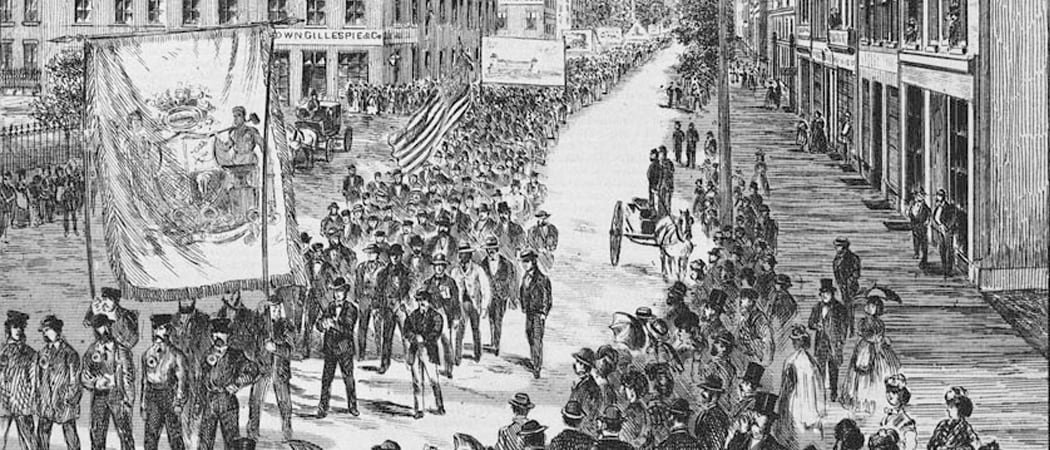
An illustration from the Canadian Illustrated News depicts the Nine-Hour Movement advocating for reduced working hours in Canada. (Canadian Illustrated News/Library and Archives Canada)
Ford’s adoption of a five-day workweek in 1926 marked a pivotal moment in reshaping work schedules across industries.
The gradual adoption of the two-day weekend globally was propelled by labor movements and legislative reforms.

Pilots conducted by the non-profit 4-Day Week Global show positive outcomes on work-life balance and productivity. (Tint Media/Shutterstock)
<h2 class="h




