On Saturday, when Jordan Bonaparte accompanied a relative to the emergency department at the QEII Health Sciences Centre in Halifax, he was taken aback by the sight of mice darting through the hallways.
However, a paramedic quickly corrected his assumptions.
“One of them mentioned that the number of mice here might equal or even surpass the number of patients,” Bonaparte recalled. “My experience in the Infirmary’s emergency room certainly confirmed that.”
After observing the mice for almost six hours, he noted that his relative was eventually moved to a room. Almost instantly, a mouse emerged and began to climb onto the bed where the patient was resting.
“I’m fairly certain that if I hadn’t stood up and stomped my feet, that mouse would have made its way onto my bed to reach the food being served to her,” he stated.
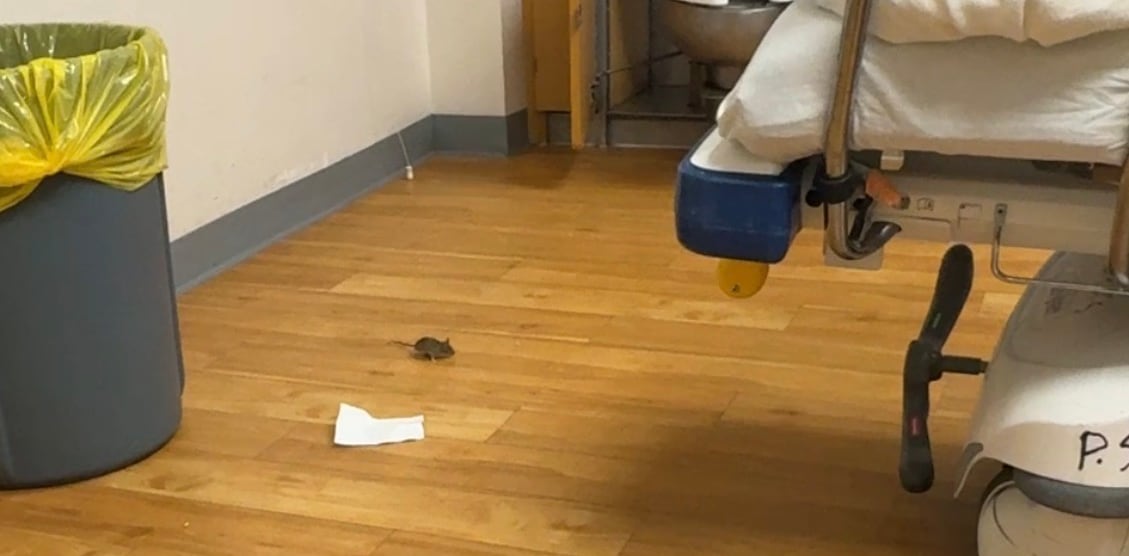
Jordan Bonaparte reported that this mouse was running around a family member’s room in the emergency department at the Halifax Infirmary. He mentioned that the mouse was so bold, it attempted to climb into the bed to access food. (Submitted by Jordan Bonaparte)
Nova Scotia Health has recognized that the situation at the QEII complex exceeds what one might typically expect in a port city, where rodents are relatively common.
Documents acquired by CBC News show that pest control expenditures for the health authority at the QEII and Dartmouth General Hospital have dramatically increased over the past five years.
The QEII, which encompasses the Halifax Infirmary, Victoria General, and Rehabilitation sites, saw its pest control budget rise from $35,942 to $323,075, reflecting an astonishing increase of 798 percent.
Dartmouth General experienced the most significant percentage rise in the province during the same period, escalating from $9,545 to $120,012 last year, marking a 1,157 percent increase.
“The frequency of these sightings has surged dramatically over the last few years,” remarked Chris Smith, the senior director for facilities operations at Nova Scotia Health.
“While it’s easy to attribute this to living in a port city, it doesn’t alter our stance that rodents have no place in healthcare environments, and we must do everything possible to keep them away and maintain those spaces clean, sanitary, and safe.”

Nova Scotia Health states that construction on the acute care tower at the QEII Health Sciences Centre has contributed to the rodent issue. (Build Nova Scotia)
Both facilities are surrounded by extensive construction activities. Smith noted that when the QEII expansion project commenced, he anticipated an increase in pest activity.
“We did foresee an uptick, but I don’t believe we anticipated the level of increase we are currently witnessing.”
The health authority reports that in the last five years, 1,435 mice or other rodents have been captured within the QEII buildings, which span 2.9 million square feet. An additional 321 rodents were caught at Dartmouth General.
“We’re operating in aging facilities with a complex environment. Hundreds, if not thousands, of individuals enter and exit these buildings daily for medical appointments, supplies, and equipment,” Smith elaborated.
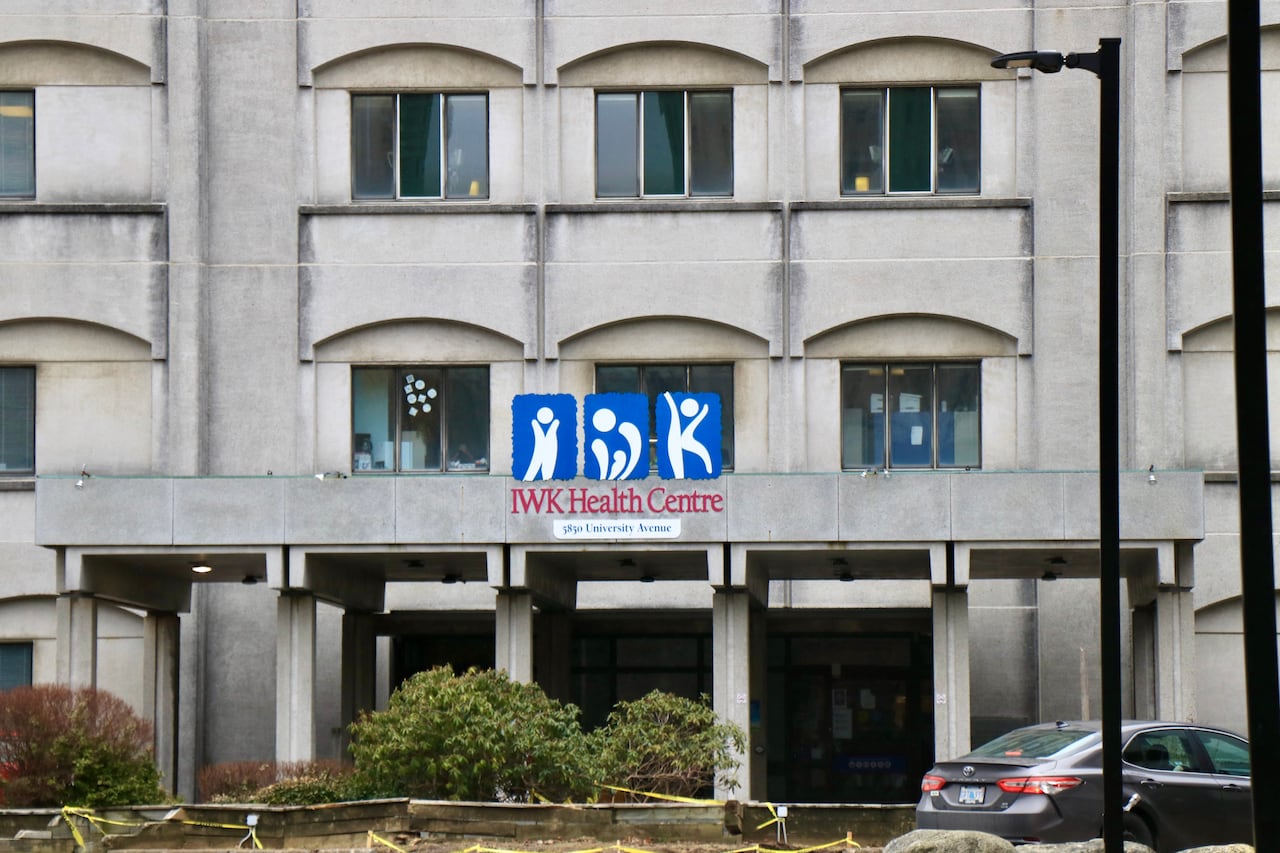
The IWK Health Centre reported needing to undertake significant efforts to address a pigeon infestation. (Paul Palmeter/CBC)
In contrast, the IWK Health Centre, located adjacent to the QEII, stated that mice are not its primary concern.
Last year, the women and children’s hospital incurred expenses of $180,000 after discovering “unusual bird activity,” which was mainly linked to pigeons.
The IWK opted not to provide an interview but issued a statement instead.
“This included extensive cleanup of bird droppings and nesting areas, along with the installation of netting and spiking in certain areas to prevent birds from nesting in the future,” the statement indicated.
The IWK anticipates ongoing monitoring of the issue, implying that some costs will continue.
While the cleanup at the IWK is mostly completed, Nova Scotia Health is still grappling with its rodent problem.
“This is a longstanding issue that will likely require several years to fully control,” Smith noted.
Smith mentioned that his department has adopted a three-pronged strategy. They have engaged professional exterminators who conduct daily visits, encouraged staff to report rodent sightings to identify areas needing traps, and initiated external inspections of the buildings to find small openings.
“These efforts have resulted in 100 to 200 work orders for sealing numerous small cracks and crevices,” he explained.
“We are actively working on any that remain open. It’s not a quick fix.”
Smith has urged both staff and patients to remain vigilant and report any rodent sightings.
Days after Bonaparte’s hospital visit, he remains unsettled by the experience and advocates for higher standards in healthcare facilities.
He shared a video of his experience on his podcast platform, The Canadian Gothic, receiving numerous comments from individuals suggesting that such occurrences are commonplace.
“If your standard for healthcare is so low that you accept the presence of mice in the emergency room where individuals are fighting for their lives, then that’s an unreasonably low expectation,” he asserted.
MORE TOP STORIES
-
Survivor of intimate partner violence a ‘profile in courage,’ says federal justice minister
-
Halifax mayor welcomes $100M federal fund for AI-powered housing approvals
-
Halifax’s Brian Ahern, who produced albums by Anne Murray and Johnny Cash, dead at 81
-
‘Poignant’ Halifax Remembrance Day ceremony comes soon after Wainwright tragedy
-
Why the first U-boat to surrender in North America landed in this N.S. town