On the 25th anniversary of the September 11 attacks, U.S. President Donald Trump emphasized the nation’s commitment to remembering the victims and their families while also addressing the ongoing military operations in Iran.
This marked the second consecutive year that Trump commemorated the day at the Pentagon in Arlington, Virginia, just outside Washington, D.C. Together with his wife, Melania, he listened as the names of 184 individuals who lost their lives at the robust military headquarters following the hijacking of American Airlines Flight 77 were read aloud on Friday.
“No one can ever be ready for a day like 9/11, but we can always decide to be the type of nation the world witnessed in the days that followed,” Trump stated, referencing the heroic actions of first responders and ordinary Americans on September 11, 2001.
In their addresses, both Trump and U.S. Secretary of War Pete Hegseth included justifications for the military actions against Iran, which have persisted for over six months.
“We honor the servicemen and women currently ensuring that the world’s leading sponsor of terrorism, the Islamic Republic of Iran, will never possess a nuclear weapon,” Trump said, eliciting a light round of applause.
Hegseth was even more forthright in his remarks about the conflict that began on February 28.
“We’re still sending terrorists where they belong, to hell, and tankers to the ocean’s depths, where they belong,” he declared.
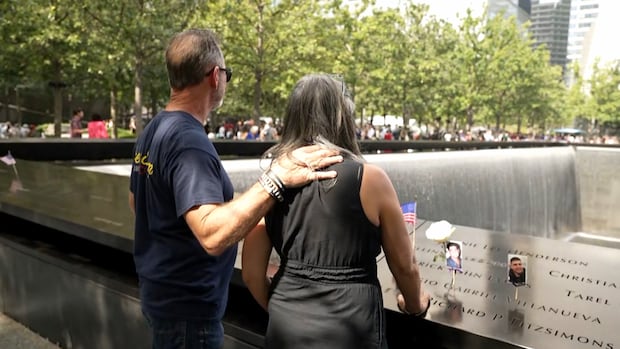
Dignitaries, survivors, and their families are gathering in New York to commemorate 25 years since the attacks of September 11, 2001. The former World Trade Centre site still evokes strong emotions for those impacted by that day — including some Canadian first responders.
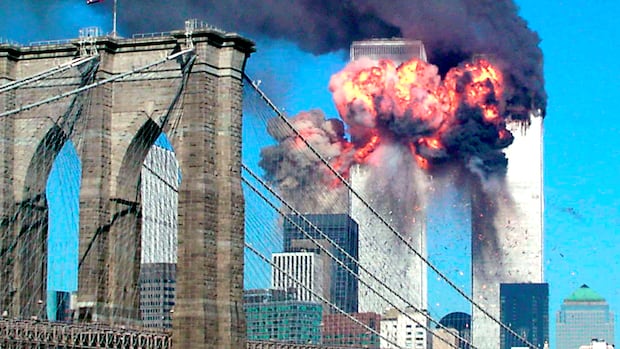
In total, four commercial aircraft were hijacked during the 9/11 attacks attributed to al-Qaeda, which had been classified as a terrorist entity by the U.S. government two years prior. Two planes struck the World Trade Center complex, resulting in the collapse of its twin towers, while another went down in a field in Shanksville, Pennsylvania.
Officials determined that the hijackers of the flight that crashed in Pennsylvania aimed for Washington but were thwarted from reaching the capital after passengers and crew overtook the cockpit.
Nearly 3,000 individuals perished in total, including 24 Canadians.
9/11 widow criticizes U.S. government
Vice-President JD Vance was present at the memorial in New York at Ground Zero in Lower Manhattan, alongside former presidents Bill Clinton, George W. Bush, Barack Obama, and Joe Biden, as well as numerous current and former officials from New York state and city. Bush, who was president on 9/11, was quickly moved from scheduled events in Florida to a secure military base in Nebraska.
Typically, political speeches are absent from the New York memorial, where family members read the names of all the victims, interspersed with moments of silence at significant intervals in the timeline of the attacks.
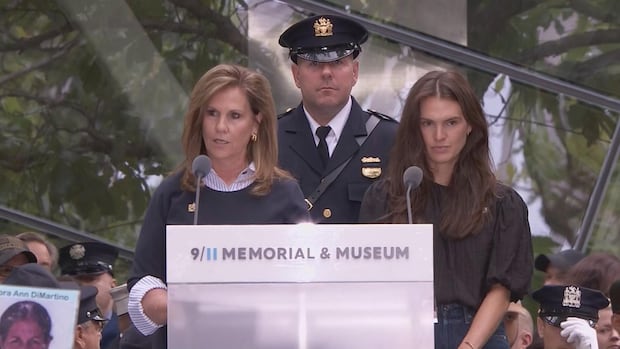
After reciting her late husband Tom’s name during the 25th anniversary 9/11 ceremony in New York, Terry Strada conveys her frustration over a prolonged legal battle she has led to hold Saudi Arabia accountable for the 2001 attacks.
Terry Strada, the national chair of 9/11 Families United, who has led a lengthy legal campaign to hold Saudi Arabia’s monarchy responsible for the attacks, broke from tradition after announcing her deceased husband Tom’s name.
“How is it that we have not achieved justice for the role that Saudi Arabia played in your murder?” she asked.
“For 25 years, each administration, including the leaders present here today, chose to shield the Saudis rather than stand with the families affected by 9/11,” Strada continued.
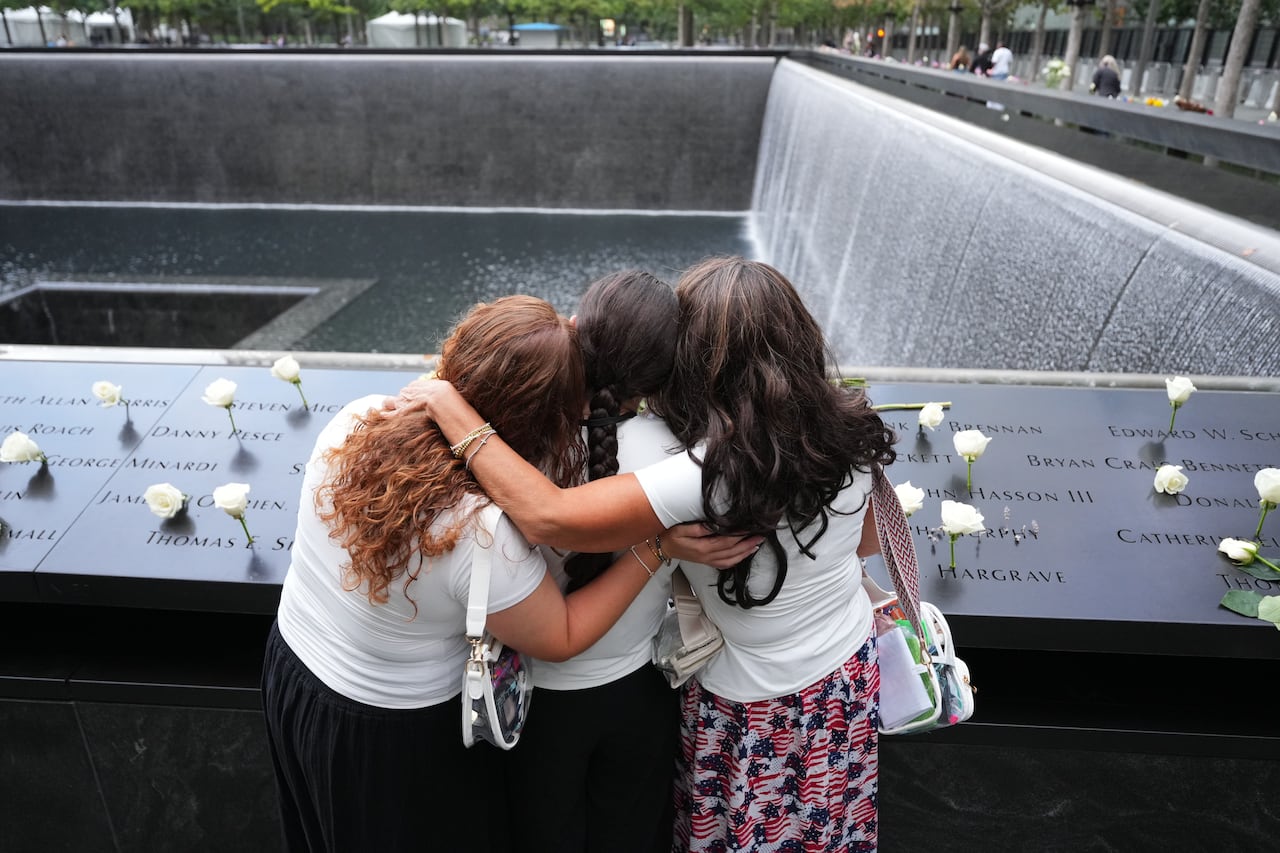
Rosanne Spirito, 49, and her daughters Sabrina, 22, and Amanda, 20, stand at the 9/11 memorial reflecting pool on Friday in New York. Spirito’s sister, Catherine LoGuidice, who worked in the North Tower of the World Trade Center, was killed on Sept. 11, 2001. (Adam Gray/The Associated Press)
For the first time, this year’s ceremony also incorporated a moment of silence to remember those exposed to the toxic dust clouds from the twin towers’ collapse who have since succumbed to cancer and other diseases.
Zohran Mamdani, New York City’s first Muslim mayor, who was a student in elementary school during the events of 9/11, expressed his desire for this anniversary to center on the families of the victims, first responders, and community members who supported one another following the attacks, which he termed a “horrific act of terror.”
The customary recitation of victims’ names at Ground Zero concluded shortly before 1 p.m. ET.
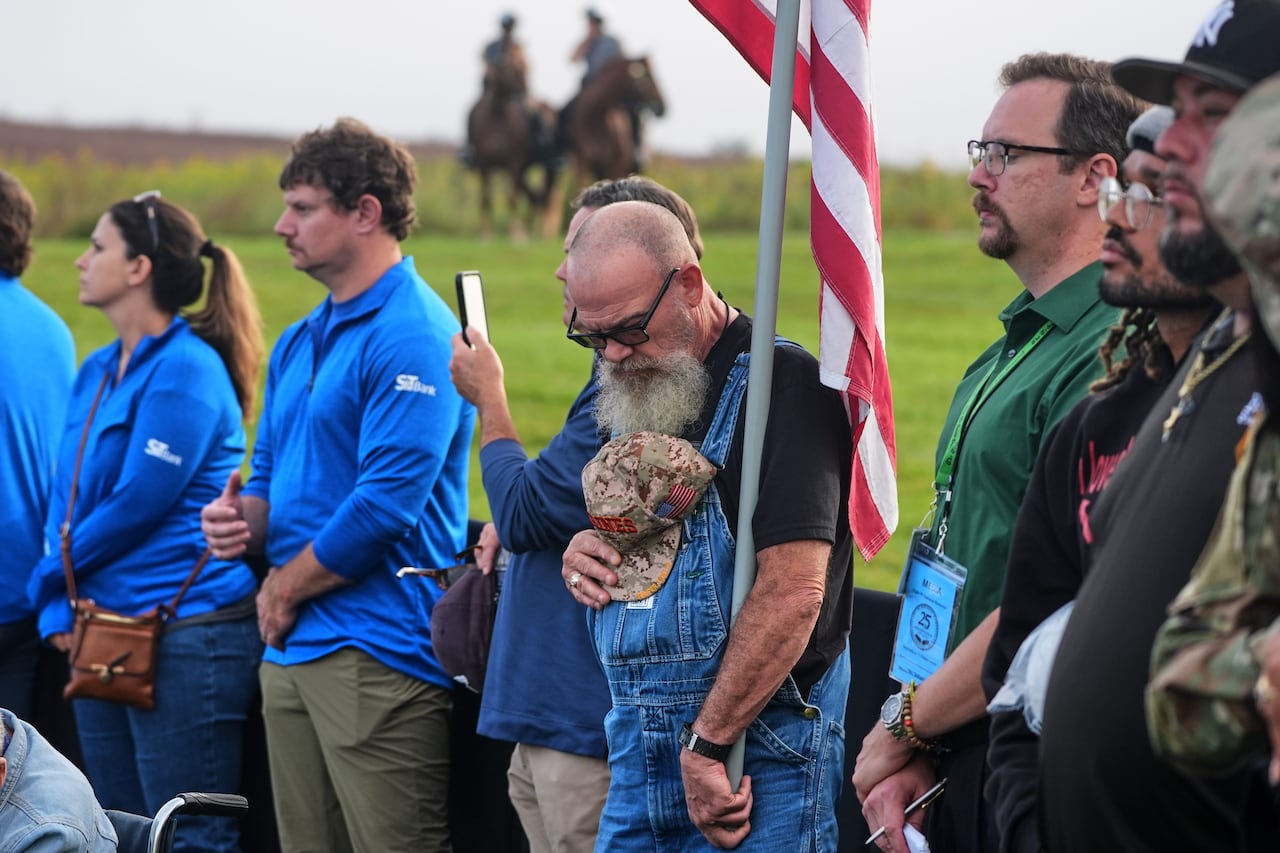
Visitors to the Flight 93 National Memorial in Shanksville, Pa., attend an observance on Friday. (Gene J. Puskar/The Associated Press)
At the memorial in Manhattan on Friday, U.S. Commerce Secretary Howard Lutnick shed a tear, yet also smiled as he gazed lovingly at the names of Cantor Fitzgerald employees etched on the walls surrounding the footprints of the collapsed towers. Lutnick was the CEO of that investment firm during the attack on the World Trade Center, which claimed 658 of its 960 employees.
Trump administration officials were also present at a ceremony in Shanksville. Beyond the formal commemorations organized by the federal government, the significant anniversary sparked memorial activities across the country, including wreath-laying, flag displays, moments of silence, vigils, and name readings for the victims.
-
‘Nothing happens here. You’re safe’: 9/11 survivors, responders recall attack aftermath
-
Inside the New York lab using genetic genealogy to identify 9/11 victims’ remains
In Canada, a somber ceremony was held in Newfoundland. Thirty-eight aircraft carrying over 6,500 passengers landed in Gander, N.L., as North American air traffic came to a standstill and flights were redirected.
The attacks transformed air travel in North America, prompted new federal surveillance and intelligence-gathering powers, and instigated ongoing discussions regarding the balance between security and personal freedoms. One of the many outcomes was the establishment of the Department of Homeland Security.
Al-Qaeda’s deadly attacks on September 11, 2001, shook the world and initiated a cycle of conflict that extended beyond its tenure as the foremost terror network. In this segment, Margaret Evans explores al-Qaeda’s decline and resurgence as a global threat.
The U.S.-led international campaign against terrorism, which included military interventions in Iraq and Afghanistan, originated from that day. The U.S. military located and killed al-Qaeda leader Osama bin Laden in Pakistan in 2011; however, the alleged architect of the 9/11 attacks, Khalid Sheikh Mohammed, is still awaiting trial 23 years after his capture at a U.S. military facility in Guantanamo Bay, Cuba.
During this period, Canada, under Prime Minister Jean Chrétien, supported the U.S. military action in Afghanistan, resulting in the deaths of 159 Canadian service members and seven civilians during the prolonged deployment.