The surge in food and housing prices has captured attention as key factors in the affordability crisis. However, data from the consumer price index (CPI) reveals that expenses related to maintaining health have also increased significantly since overall inflation peaked in June 2022.
Experts suggest that the rise in health-care costs may not be readily noticeable to many Canadians. This is partly due to the fact that much of these expenses are subsidized by the public health-care system—meaning they are not reflected in CPI statistics—and also because typical out-of-pocket health costs are often irregular.
“You pay your rent each month and your grocery bills weekly,” said Jimmy Jean, vice-president and chief economist at Desjardins Group in Montreal, during an interview with CBC News. “These are very visible to consumers, unlike a dental visit which may occur only twice a year.”
Despite being less visible, health-care prices have experienced a “steeper increase” in recent years, according to Andrew Longhurst, a senior researcher at the Canadian Centre for Policy Alternatives (CCPA)—a trend that may worsen.
“I believe this growth will continue as we see an aging population and provincial governments—especially in larger provinces—adopting more fiscal restraint and austerity measures,” Longhurst stated.
Since June 2022, the all-items CPI, which measures overall inflation, has risen just over 11 percent. In contrast, the broader health and personal care category has seen a much sharper increase of more than 15 percent during the same period, following behind shelter costs (over 16 percent) and food prices (almost 19 percent).
Specifically, the sector of health-care services—which includes services like eye examinations, physiotherapy, and essential dental care—has escalated by 18.5 percent, nearly matching the rise in food prices.
-
Federal health minister voices concern as Alberta implements dual-practice health-care model
-
Video
1 in 4 Canadians can only afford minimum credit card payment
Prices for dental services and eye care products have both surged by 20 percent since June 2022, illustrating a divide between private and public sectors within health care, according to Longhurst, with costs regulated on only one side.
“Most of the market for prescription glasses and contact lenses is private and profit-driven, increasingly influenced by private equity. The same is true for dental services,” he explained. “These areas lack public provision and only have limited non-profit options, with no public guidelines restricting their costs.”
A long-standing trend
Data from Statistics Canada indicates that health-care service prices have consistently outpaced overall inflation rates long before the COVID-19 pandemic. Over the past two decades, health-care service inflation has exceeded overall inflation 85 percent of the time.
During this timeframe, inflation in health-care services was notably lower than the general inflation rate only during the pandemic-era spike, which was driven by a surge in other prices rather than a decrease in health-care costs.
This long-term trend can be attributed to the economic factors associated with health and dental services, where significant expenses arise from skilled labor costs, according to Jean from Desjardins Group.
“These sectors face challenges in achieving efficiency gains or productivity improvements that could help reduce costs,” he noted.
“These areas are particularly sensitive to wage costs, and with labor shortages and an increasing population, demand for these services remains high while it has also become more challenging to find qualified workers in specific health-care fields.”
Moreover, as Longhurst from the CCPA pointed out, there are no regulations preventing these costs from rising, unlike services covered by provincial health insurance, such as doctor visits.
-
5 million Canadians now covered by national dental care plan, but nearly half haven’t been to a dentist
-
Man denied dental coverage under national plan says insurer ‘playing games’ with Canadians
“Public health-care rates are determined by agreements between governments and service providers,” he elaborated. “In the case of physicians, the fees are negotiated, which helps control these costs.”
In 2024, following the inflation peak of 2022, Canada introduced the Canadian Dental Care Plan, but the CPI for dental care has continued to rise. Jean noted that the dental plan may have increased demand within a sector already limited by workforce requirements.
Additionally, Longhurst mentioned that the plan is managed by a private insurer, meaning “the responsibility lies with the patient to ensure they visit a dental office that the public portion will cover.” Many individuals end up paying additional out-of-pocket expenses, he stated.
The program has also led to ongoing issues for patients and dentists.
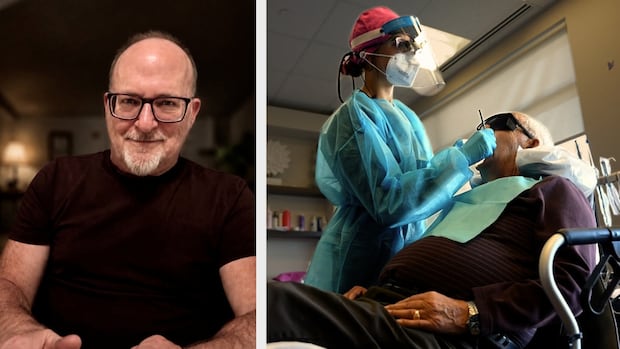
The Canadian Dental Care Plan provides care to uninsured Canadians with a household income of less than $90,000. More expensive procedures like crowns or dentures require pre-authorization. Patients and providers say those pre-approvals are frequently denied by Sun Life, which administers and processes claims.
Out of sight, out of wallet
Despite this, many Canadians might only have a vague awareness of the rising costs in health care. A substantial portion of their expenses is covered by the public system, making the remaining out-of-pocket costs less significant compared to other expenditures. In 2025, food and shelter accounted for nearly 50 percent of the total CPI basket, while health and personal care made up about one-tenth of that.
As Jean pointed out, many health-care costs are not at the forefront of people’s minds since they do not appear in monthly or weekly budgets. Even though dental and eye care are essential and not considered discretionary, patients often have some flexibility in the short term.
“What we are observing with the affordability crunch is that people are cutting back on expenses like life insurance—these are areas where they may try to save or postpone spending because they are not urgent,” Jean explained.
“The same logic applies to dental or eye care appointments: When facing financial pressure, individuals often prioritize paying their mortgages and filling their gas tanks.”
The increasing private burden
Although private health care spending may not reach the levels of expenditures on food and housing, Canadians are taking on a greater share of health-care costs through private spending. A recent analysis by the CCPA of data from the Canadian Institute for Health Information indicated that between 2021 and 2023, per capita private health-care spending increased by 8.1 percent—almost double the growth rate of public spending.
“We are witnessing a rapid rise in spending growth as the population ages and provinces reduce their investments in these sectors,” Longhurst noted. “People require these services; they cannot simply do without them. This explains why health-care inflation remains high, as opposed to traditional goods where consumers can delay purchases like cars—they need these services and will continue to pay for them.”
Longhurst cautioned that the additional financial burden could disproportionately impact those less equipped to manage such costs, pointing out existing “significant disparities in access to care based on income and the ability to afford out-of-pocket services.”
These disparities are likely to increase, he warned, “if provincial and federal governments do not intervene to address these gaps. This issue is becoming increasingly evident as access to care becomes more challenging nationwide, whether in emergency rooms or for family doctors.”