
Environmentalists have been tirelessly working to prevent the extinction of a rare bird species in the United Kingdom.
The recent progress in safeguarding the Montagu’s harrier’s British population can be largely credited to one exceptionally prolific male, as per environmentalist Mark Thomas.
The noteworthy 10-year-old individual known as AU, symbolizing gold, has fathered 16 offspring throughout his life, with 10 of them born in the last two years.
“He’s excelling at what he does,” Thomas, the species lead for the Royal Society for the Protection of Birds (RSPB), revealed to guest host Paul Hunter on As It Happens.
“He is solely upholding this species in the U.K. There’s no doubt about it.”
‘A Remarkable Year’
Montagu’s harriers are migratory raptors that winter in Africa and parts of Asia, returning to Europe for breeding during spring.
Globally, their population is dwindling and categorized as a species of least concern on the International Union for Conservation of Nature’s Red List.
In the U.K., the RSPB notes that these already scarce birds have been rapidly declining, facing the threat of local extinction.
In the 1950s peak, there were around 30 breeding pairs in the U.K., which plummeted to zero in the ’70s, before rising to 13 in the mid-2000s. This was followed by another sharp decline with no breeding pairs reported between 2000 and 2003.
“We are eager to preserve the existing birds,” Thomas stated. “And it has been an exceptional year.”
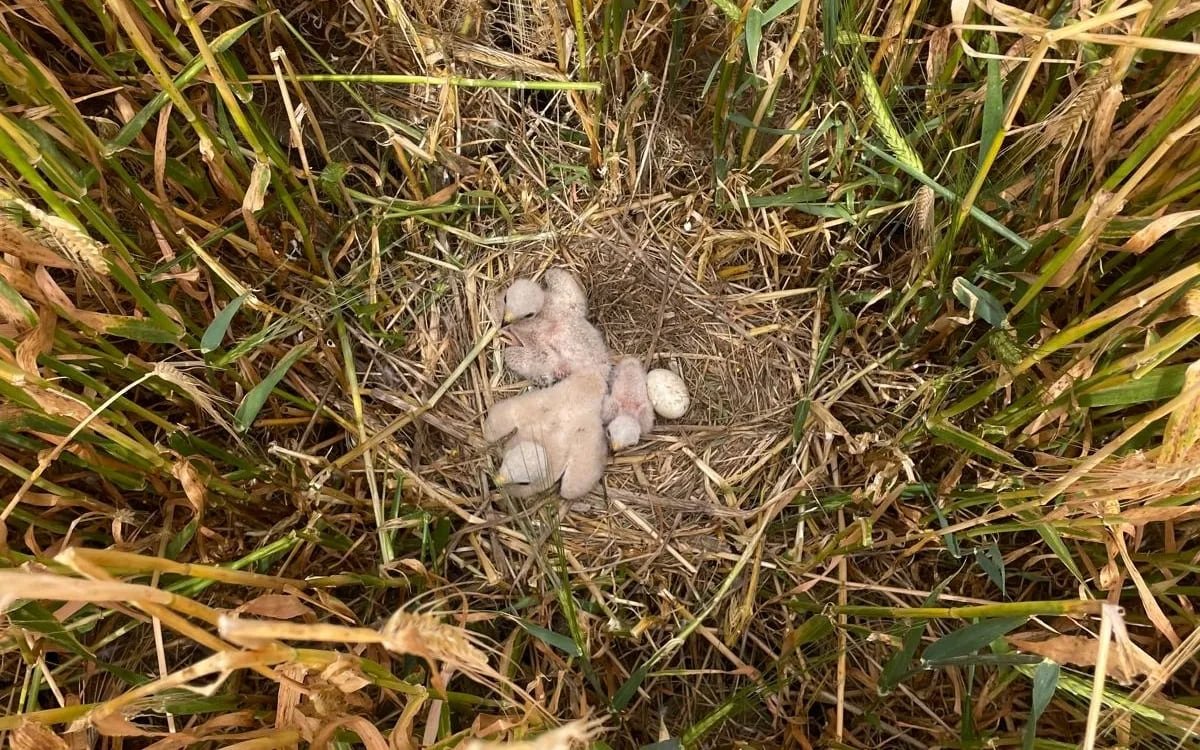
This success is attributed to AU.
After successfully raising four chicks in 2025, the renowned “golden boy” returned this year to perform his aerial mating displays to attract potential female partners.
“He will soar to great heights and execute impressive twists and turns, flaunting his wings,” Thomas described. “The females will then join him, chasing him around.”
This year, three females vied for AU’s attention, according to Thomas.
“The trio had a fierce competition, resulting in two remaining females that nested with him.”
Ensuring Nest Protection
AU fathered six chicks with his two mates, comprising four females and two males.
Conservationists are optimistic that his male offspring will return to the U.K. for breeding in the future. Two male descendants from 2025 have already been sighted in the country, though they are not yet of breeding age.
“This is a positive sign for the population’s continuity,” Thomas remarked.
The six new hatchlings are evenly