For Canadian artists who tuned into the federal budget announcement on Thursday, it may seem like a financial boon is on the horizon.
“In Budget 2026, we’re supporting the Canadian artists who narrate our stories,” Prime Minister Mark Carney posted on X shortly after Finance Minister François-Philippe Champagne introduced the Canada Creative Credit in the House of Commons.
This tax incentive is specifically designed for individuals earning income from “original and creative artistic works” in Canada, as outlined in the budget.
“This means that as a Canadian artist, you’ll be exempt from taxes on up to $45,000 of income generated by your creative endeavors,” Carney elaborated in his post.
However, how much can artists realistically anticipate receiving? Which categories of artists will benefit from this initiative? And when, if at all, will this come into effect?

Canada’s national museums are set to receive a $783-million increase in funding from the federal budget over the next five years. The implications for the National Capital Region are discussed by CBC’s David Fraser.
What is the Canada Creative Credit?
The budget indicates it will likely be structured as a non-refundable tax credit that would “offer tax recognition on up to $45,000 of annual qualifying net business income derived from original and creative artistic works.”
A non-refundable tax credit serves to reduce the total income tax owed at the end of the fiscal year, according to tax consultant and content creator Chris Raymond.
Essentially, the government assesses your total income tax based on your earnings. The credit is then deducted from this total, lowering the overall tax obligation.
What distinguishes credits like the Canada Creative Credit as “non-refundable” is that they cannot lower your tax amount below zero. If your credit exceeds your tax liability, you do not receive the excess as a refund.
“The taxable income is the figure we actually use to determine how much tax you owe,” Raymond explained. “Once that tax total is calculated, that’s where the non-refundable credits come into effect.”
How much could you receive?
Currently, Canadians benefit from a non-refundable tax credit known as the Basic Personal Amount, which generally applies to approximately $16,000 for most income brackets.
The Canada Creative Credit is expected to bridge the gap between the Basic Personal Amount and the government’s target of $45,000, according to Robert Gillezeau, an assistant professor of economic analysis and policy at the University of Toronto.
“If you are an artist earning, say, $40,000, $50,000, or even up to $100,000, this will significantly change your income profile at the end of the year,” he noted, suggesting it could amount to several thousand dollars annually for qualifying artists.
“It should offer a substantial enough incentive to encourage some individuals to pursue work in this field rather than elsewhere.”
-
FRONT BURNER
Carney’s big federal budget bets
-
Your questions about this year’s federal budget, answered
Nonetheless, this overlooks a potentially significant additional tax source, remarked Mohammed Al-khooly, a Toronto-based chartered professional accountant (CPA) and content creator.
“For someone to truly benefit from the first $45,000 income exemption, provinces would also need to implement a similar credit for provincial taxes,” Al-khooly explained.
“It’s not entirely tax-free; it’s tax-free solely for federal calculations.”
Who qualifies?
This aspect may get complicated.
CPA Sam Cao noted that the budget indicates support for emerging Canadian artists, emphasizing that “Canadian painters, sculptors, ceramicists, writers, musicians, and actors are our storytellers.”
However, the budget lacks a precise definition detailing which artist types would qualify for this credit, leaving uncertainty about whether a violin instructor or filmmaker is more likely to receive approval.
“There will likely be some prescriptive list categorizing various professions as included or excluded. This will likely be somewhat arbitrary,” Gillezeau remarked.
“While they discuss supporting creativity and the arts broadly, any form of writing could potentially fall under that umbrella. If, for instance, any type of original writing is deemed eligible, the cost of this credit could escalate dramatically.”
When inquired about a definitive definition of qualifying artists, a Department of Finance official directed CBC News to the budget release, stating additional details would be forthcoming in the spring economic update of 2027.
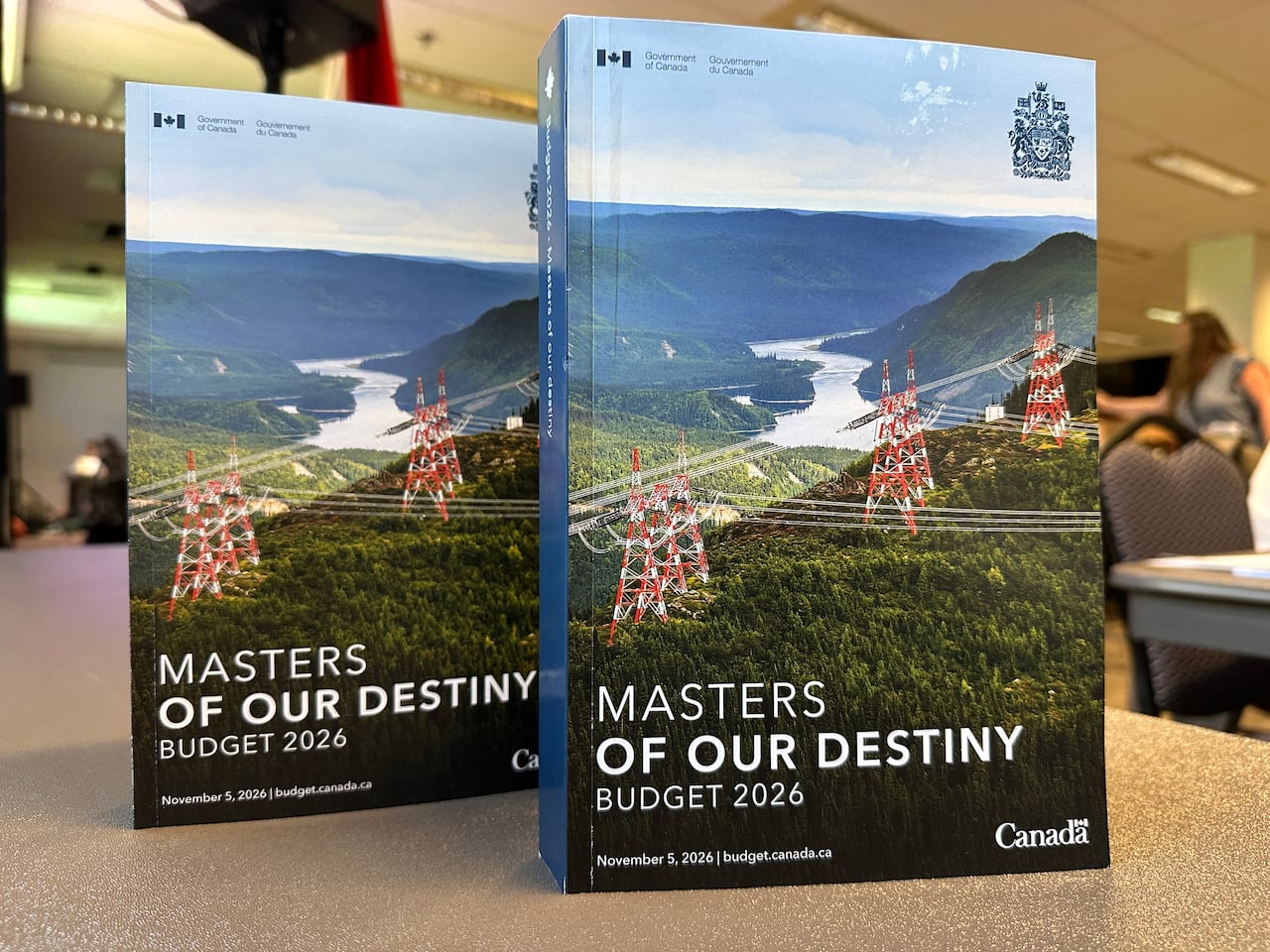
Printed copies of the 2026 federal budget. (David Thurton/ CBC)
How likely is this to become a reality?
According to Raymond, the Canada Creative Credit is more of a proposal than a confirmed financial benefit.
“Clearly, the budget hasn’t been ratified. They haven’t stated that if the budget is approved, this will be implemented,” he commented. “What they have indicated is that they have a concept of how this might function and intend to consult with industry stakeholders regarding it.”
Canada has other specialized tax credits, such as those for educators and volunteer firefighters. However, Cao noted that if the Canada Creative Credit were to take a form even slightly resembling its current description, it would signify a unique advancement.
“This may be the first tax credit of its kind specifically aimed at self-employed individuals through a non-refundable personal income tax credit,” he stated.

Federal Finance Minister Francois-Philippe Champagne joins Matt Galloway the morning after the budget presentation, along with analysis from CBC’s chief political correspondent Rosemary Barton.
Gillezeau pointed out that tax policies targeting specific professions often face criticism from economists, likening the potential outcome of the Canada Creative Credit to the “boutique” tax credits from the Stephen Harper administration that expanded the tax code excessively.
Additionally, there are parallels to arts subsidies seen during the 1930s New Deal, wherein the U.S. government funded art for the public good.
What sets this proposal apart is the suggestion of significant, profession-specific tax credits for income, Gillezeau stated. However, the specifics of its potential realization remain largely uncertain.
“It raises questions about whether this constitutes a valuable public policy,” he remarked. “Yet, the actual implementation details are still far from clear.”