

In numerous locations across the nation, tennis and pickleball enthusiasts are engaged in a contentious battle for access to courts.
For instance, a petition was initiated by a local tennis player in Scarborough, Ont., urging the city to reverse its decision to convert two public tennis courts into six pickleball courts last year.
A dispute between pickleball and tennis players over public court access on Mayne Island, B.C., escalated to B.C.’s Supreme Court.
According to Matti Siemiatycki, a geography and planning professor at the University of Toronto, these local conflicts mirror broader challenges in sports and recreation where there is a scarcity of public facilities for various activities.
Siemiatycki emphasized the need to address the shortage of recreational facilities by requiring housing developers to construct more amenities than current regulations demand.
Peter Donnelly, a retired professor emeritus from the University of Toronto, suggested revisiting post-World War II public housing policies that integrated parks and recreational spaces into residential developments to tackle the issue.
The proliferation of pickleball and tennis amid a housing crisis underscores the necessity to enhance recreational infrastructure to meet growing demand.
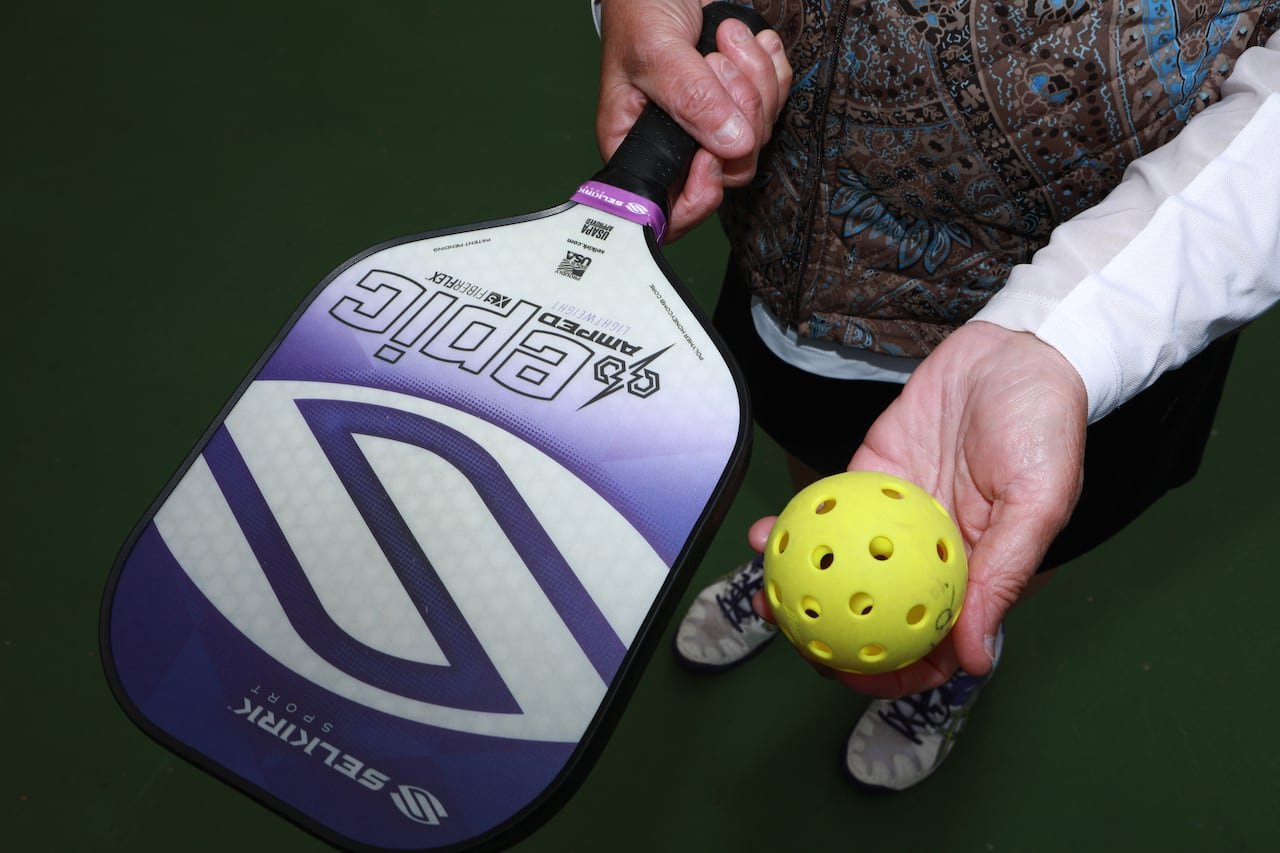
Connie McCann of Victoria’s regional pickleball association holds a paddle and ball in 2022. (Chad Hipolito/The Canadian Press)
Should developers do more?
Traditionally, housing developers engaging in projects exceeding zoning restrictions had to negotiate with municipalities, often involving community consultation, explained Siemiatycki.
Recent changes in planning legislation have curbed the charges imposed on developers by municipalities to expedite housing construction, potentially impacting funding for public recreational spaces.
<p class="paragraph-b3GxD




