This week, Poland is host to a significant showcase of the future of military technology, prominently displayed under a vibrant Canadian maple leaf.
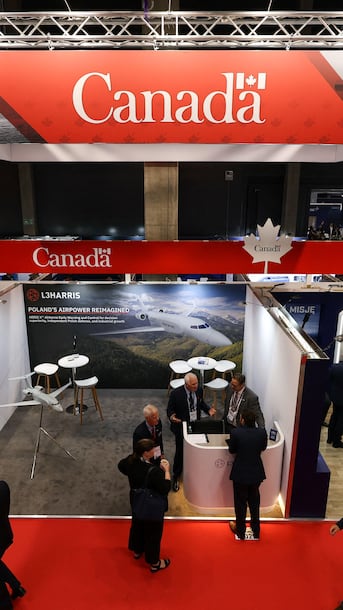
In a notable first, Canada is taking on the role of “lead nation” at the prominent European defence trade event, MSPO, held in Kielce, Poland. This exhibition features over 230 companies and organizations within the Canada Pavilion.
The country’s substantial presence is accentuated by red and white signage featuring the Government of Canada logo, complemented by the sounds of military bagpipes creating a vibrant atmosphere.
In response to rising security concerns, Europe is investing heavily in its defence sector, mobilizing up to 800 billion euros (approximately $1.3 trillion Cdn) over the next three years.
-
Canada was prepared to send ships to Iraq in 2003 if UN approved action, records show
-
Trump to Canadian plane maker Bombardier: You can’t sell in U.S. unless you build in U.S.
A key aspect of this initiative is referred to as SAFE (Security Action for Europe). Canada is the sole non-European nation invited to engage, enabling it to contend for European defence contracts while committing to support Ukraine’s defence industrial capabilities.
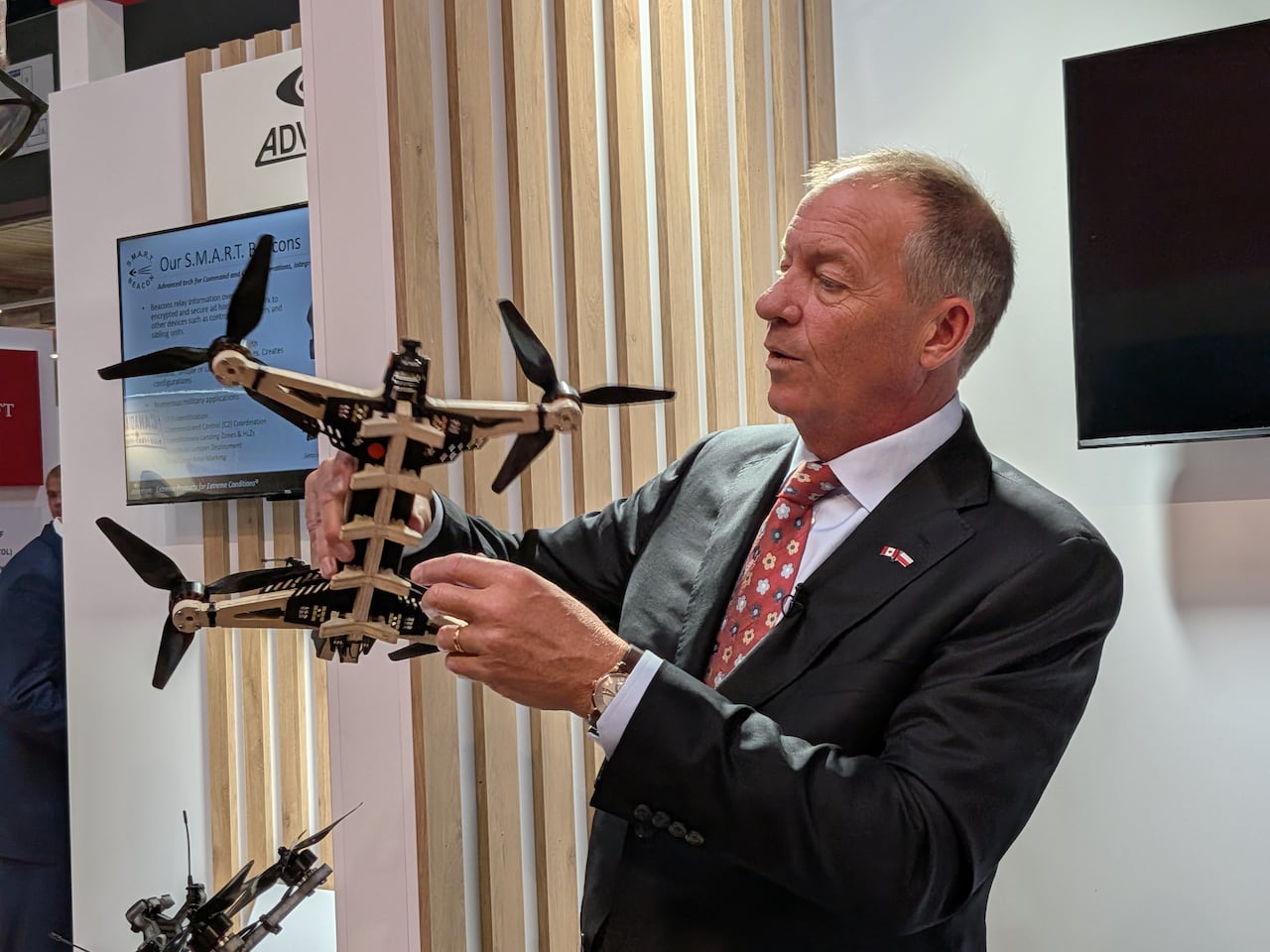
Charles Barlow, CEO of Ottawa’s Robotics Centre, showcases his company’s drones at the International Defence Industry Exhibition in Kielce, Poland. (Katie Pedersen/CBC)
Charles Barlow, the CEO of the Robotics Centre in Ottawa, expressed his astonishment at the shift in Canada’s stance and its newfound enthusiasm for industries that were previously overlooked.
“Defence used to be a taboo topic. [Federal] trade commissioners wouldn’t offer assistance,” Barlow remarked in an interview at his exhibition booth.
However, a trade conflict with the United States, along with Canada’s efforts to diversify its industries away from its primary trading partner, has significantly transformed the landscape.
“This is a major breakthrough as we expand our influence in Europe,” stated Defence Minister David McGuinty, who was in Kielce on Tuesday to officially inaugurate the event.
“We are diversifying, progressing to the next phase, and we are open to serious discussions with the United States. However, at this moment, the focus is on our communities, our workforce, and fostering growth in our defence sector,” he added.
Many Canadian exhibitors informed CBC News that they would not have been able to participate in Poland without financial assistance from the Carney administration.
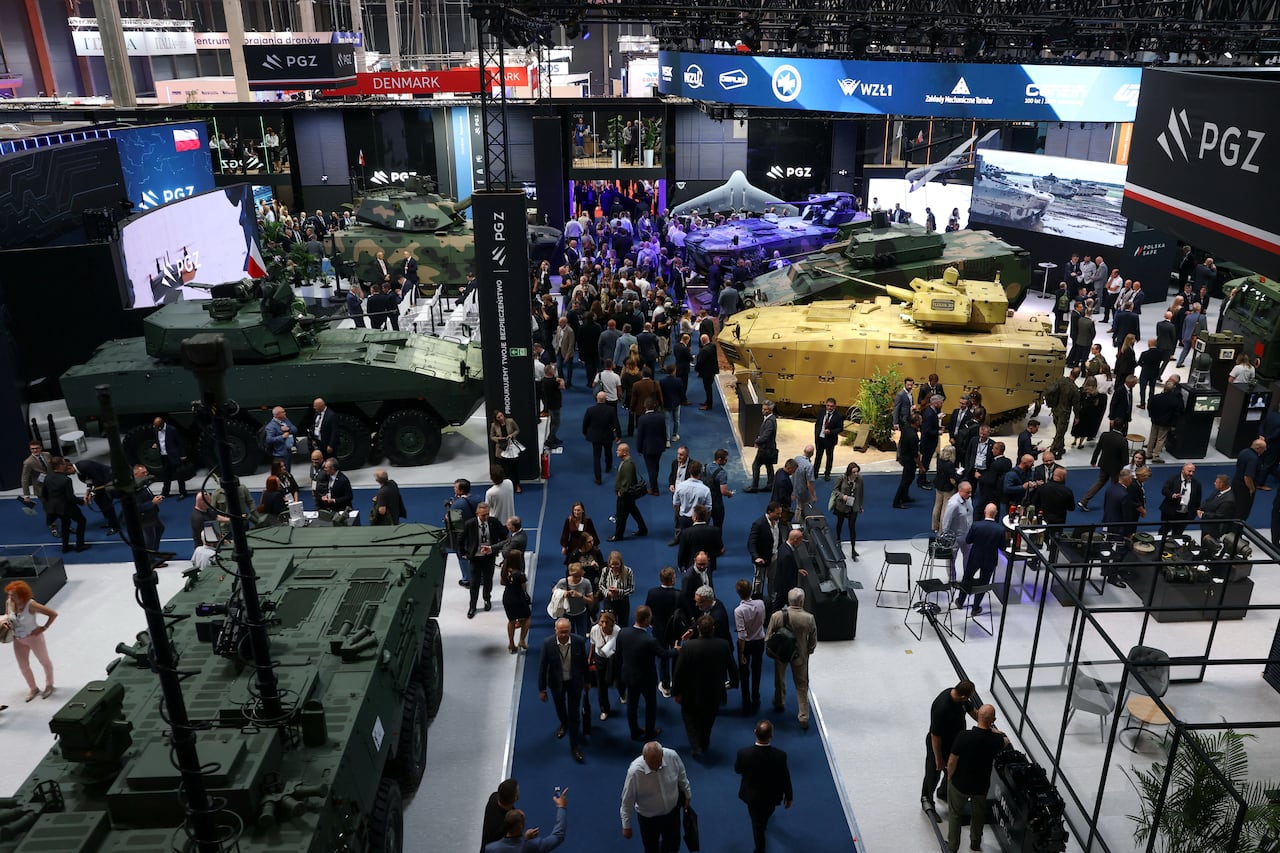
Attendees explore the exhibition of the Polish state-owned defence group PGZ on the first day of the International Defence Industry Exhibition (MSPO) in Kielce, Poland, on September 8. (Kacper Pempel/Reuters)
With the stigma surrounding financing, promoting, and publicly supporting defence technology dissipating, the industry is eager to adapt rapidly.
Barlow’s firm, specializing in small drones and quadcopters, has experienced remarkable growth in the past year, partly due to new agreements with European clients.
The company is preparing to relocate from its current location near Lansdowne Park in Ottawa to a spacious new facility in Kanata, covering 32,000 square feet.
“One year ago, we had 15 employees. Today, we have 56,” he noted.
The success of his quadcopters can be attributed to the innovative use of non-traditional materials, originally requested by Canada’s Department of Defence, which is now garnering interest from other markets.
“We’ve actually constructed the drone body from plywood. It performs just as well as the carbon-fibre version, which surprised everyone,” Barlow shared.
Other components — including a camera, guidance system, and payload — can be easily attached to the lightweight structure.

Sgt. Marshall McPhail from Yellowknife poses for photos in Canada’s Pavilion at the MSPO’s International Defence Industry Exhibition in Kielce, Poland. (Chris Brown/CBC)
Government statistics indicate that Canada’s defence sector contributes $10 billion to the national economy and sustains over 81,000 jobs. The government’s updated Defence Industrial Strategy aims to generate more than 125,000 new jobs within the next decade.
While red and white banners along with maple leaves aid in branding, penetrating the European market presents considerable obstacles.
“It’s a challenging market,” remarked Christyn Cianfarani, the CEO of the Canadian Defence and Security Industries Association (CADSI). “Many companies in the [Canada] pavilion are small to medium-sized enterprises. Selling directly to large government entities is quite difficult for a small business.”

Cianfarani emphasizes the critical role of government support. For instance, when Canada procures items from a European country and a Canadian company is involved, it becomes integrated into European supply chains.
“Canada has recently announced plans to purchase submarines, and the Germans have committed to incorporating Canadian firms into their supply chains — that’s a fantastic approach,” Cianfarani stated.
Nevertheless, Cianfarani warns that the influence of the United States — the world’s largest defence spender — remains substantial.
“Shifting away from the United States, where it accounts for over 50 percent of our market share, is not an easy transition for Canadian businesses. The U.S. is nearby, operates within the same time zone, and our NORAD partnership has afforded us certain advantages.”

Christyn Cianfarani is the president and CEO of CADSI, Canada’s foremost defence industry association. (Katie Pedersen/CBC)
David Lord of Zeal Motor, located in Bromont, Quebec, is among those navigating these significant transitions in Poland this week.
His company produces large all-terrain vehicles, known as Fat Trucks. Equipped with massive buoyant rubber wheels and a flexible chassis, these trucks are designed for Arctic conditions and can conduct search and rescue missions in challenging terrains.
Lord mentioned that he has secured buyers in Canada, the United States, and Great Britain, but is now targeting the European market, which is proving to be as arduous as the terrains that Fat Trucks are designed to traverse.
One of the primary hurdles, he explained, is simply demonstrating the vehicle to potential buyers.
“Selling software [to Europe] is straightforward. However, transporting a 21,000-pound piece of equipment across the ocean requires a significant investment,” he stated.
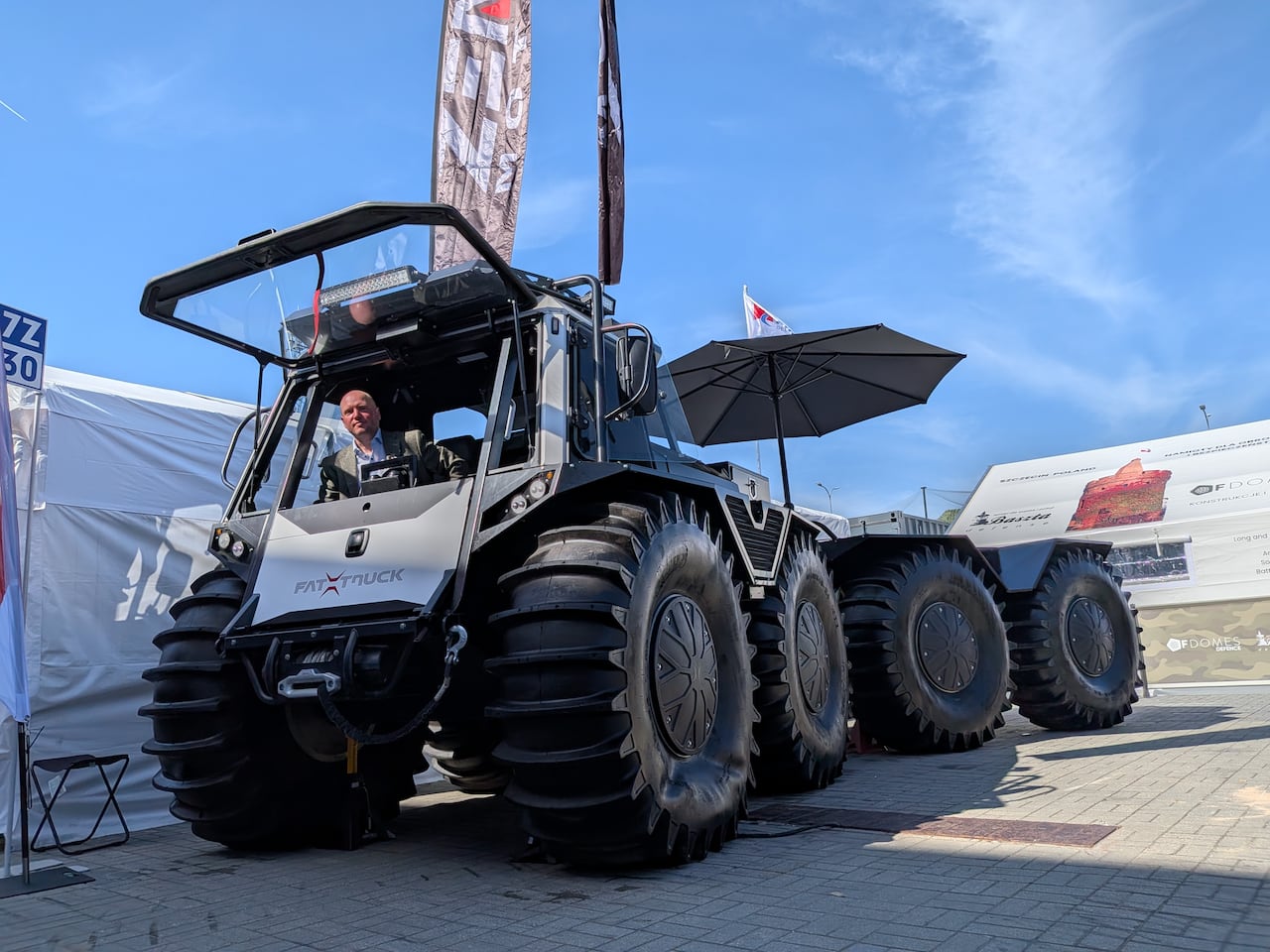
David Lord from Quebec-based Zeal Motor showcases the company’s amphibious Fat Truck, designed for traversing challenging Arctic terrains and beyond. (Katie Pedersen/CBC)
“Experiencing the driving capabilities and conquering terrain is unparalleled, and that’s our current goal,” Lord added.
In addition to steep shipping costs and logistical challenges, Canadian companies are entering a European market that has been fundamentally transformed by the ongoing conflict in Ukraine.
The war has disrupted decades of military complacency, compelling European forces to acknowledge that traditional, slow procurement methods are no longer effective.
For Canadian businesses to thrive in this environment, they must keep pace with a continent that is evolving at an unprecedented rate.
“The procurement framework for everyone is rapidly changing, especially for equipment that is being developed quickly,” stated Barlow, the Ottawa drone manufacturer.
“It’s no longer feasible to spend years designing a ship, commencing production, and then launching it eight years later. We must deliver within eight months, and that urgency is increasing,” he explained.
For companies like Robotics Centre, competing against heavily subsidized European counterparts on their home ground has become the new, high-stakes reality.
“That’s the landscape we are currently operating in,” Barlow concluded.