The fire that ravaged Antonina Gladkova’s property at the start of 2024 marked the onset of a prolonged period filled with distress and financial strain, costing her tens of thousands of dollars. She feels compelled to caution other homeowners about the potential pitfalls hidden within their mortgage agreements regarding insurance claims.
However, she claims that the fire was merely “the first nightmare.” “It only escalated from there,” she added.
Initially, Gladkova felt a sense of relief due to the seamless interaction with her insurance provider, which agreed to cover the entire cost of rebuilding her section of the semi-detached house in Georgetown, Ontario.
Unfortunately, her mortgage lender failed to release the insurance proceeds in alignment with her contractor’s bills, leaving Gladkova and her boyfriend tens of thousands of dollars short and forced to secure a private mortgage to manage the funding gaps and keep the construction moving amid costly delays.
“We were absolutely furious,” she expressed.
Though it is standard for insurance payouts to be disbursed in phases through a homeowner’s mortgage lender, legal authorities indicate that cases like Gladkova’s are becoming increasingly prevalent. This is why she aims to share her story to help others avoid similar situations.
“The entire system is flawed. That’s why I want people to be aware … be prepared,” she stated.
‘A chicken and egg situation’
In February 2024, a fire erupted in the adjacent half of Gladkova’s semi-detached home. Tragically, her neighbor lost their life in the blaze, which then spread to her half, utterly devastating it. Although Gladkova had initially lived in the house, she had been renting it out for several years after moving in with her boyfriend.
A little over a year post-fire, the insurance payout for the home’s reconstruction was approved at just above $508,000. Due to the existing mortgage, the lender, Simplii Financial, was tasked with disbursing the funds.
The contractor requested an initial payment of $101,600, yet Simplii only released $25,000, as indicated by bank statements reviewed by CBC News.
After the couple raised the issue, Simplii, which is affiliated with CIBC, provided an additional $25,000 as a “one-time exception.” However, this still left them significantly short.
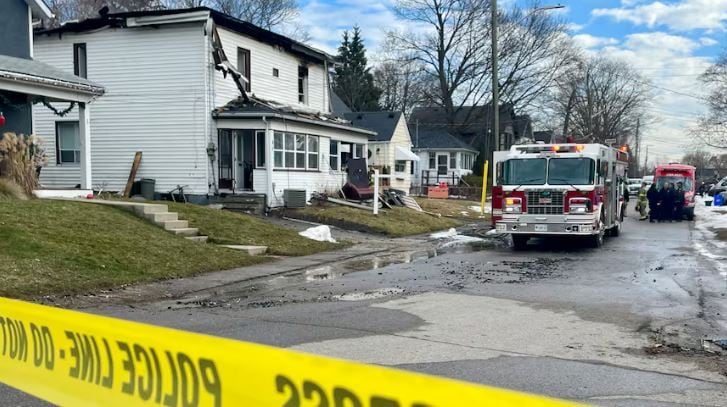
A fire broke out on the other side of Antonina Gladkova’s semi-detached house in Georgetown, Ont., in February 2024. It spread to Gladkova’s half of the property, completely destroying both homes. (Mehrdad Nazarahari/CBC)
Gladkova explains that the initial plan was for the bank to release funds based on builder invoices and verification of work completed. However, this necessitated that the contractor, whom she claims was selected by the insurance company, finance the work upfront.
“You cannot construct without the funds. It’s a classic chicken and egg dilemma,” Gladkova remarked.
The couple lodged an official complaint with Simplii, requesting the bank release an additional $51,600 to settle the invoice completely and maintain construction progress. The bank refused.
According to Gladkova, they lacked sufficient funds to cover the gap, forcing them to obtain a private mortgage with a 10 percent interest rate.
Following the formal complaint, records indicate that Simplii revised its procedure to release funds based on progress reports detailing the completed work. For instance, if 20 percent of the project was done, Simplii would grant 20 percent of the overall insurance payout.
However, correspondence between Gladkova and Simplii reveals that the bank began calculating based on the first insurance check rather than the total insurance amount, leading to the couple consistently being approximately 35 percent short in their payments to the contractor.
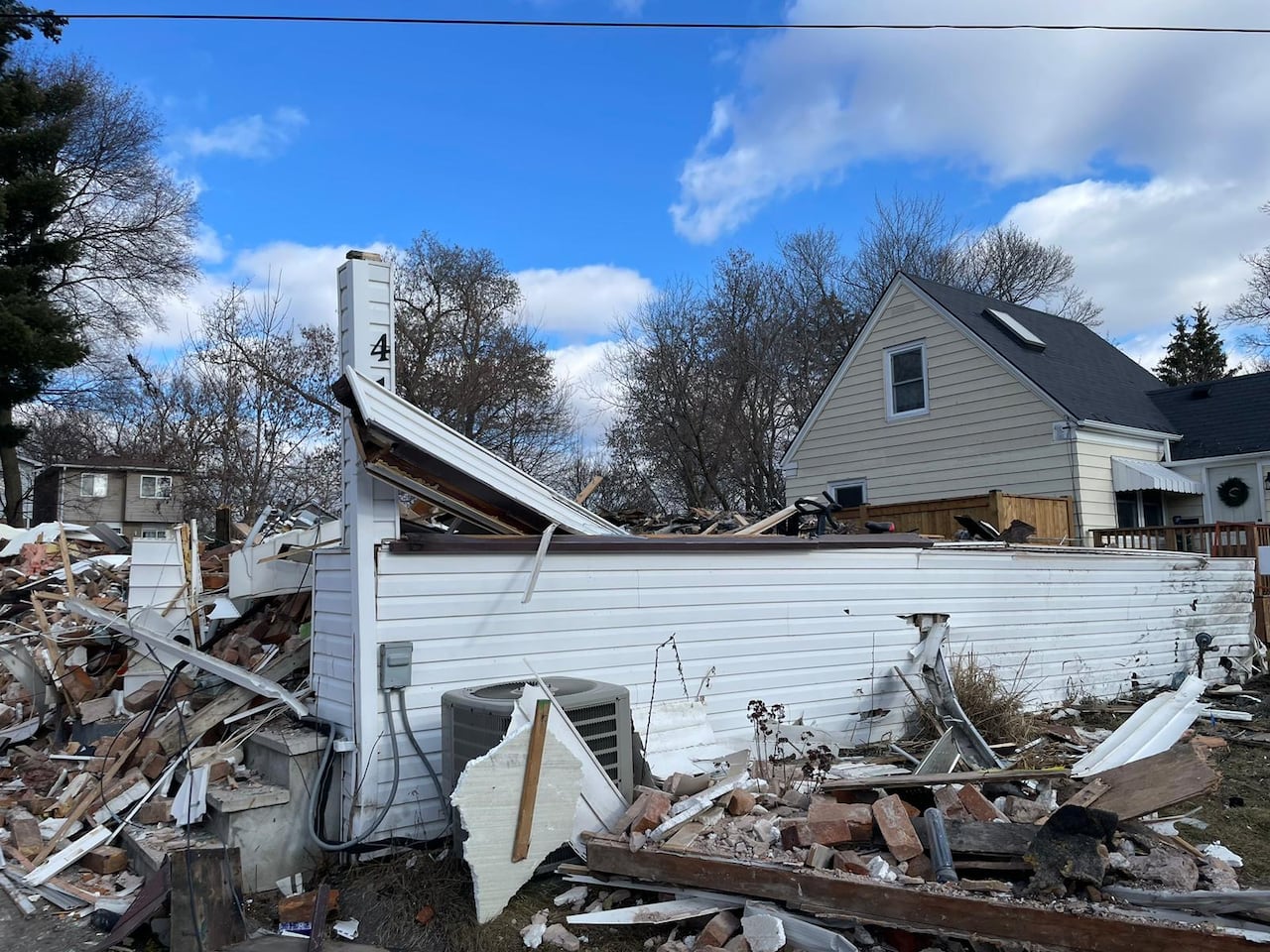
Antonina Gladkova’s property was completely destroyed in the fire and her insurance company paid to rebuild the house. (Submitted by Antonina Gladkova)
Eventually, Simplii disbursed all the funds, including an additional exception payment made this past April to cover a shortfall for the third construction invoice.
The reconstruction was finalized this past June, approximately six months behind the anticipated schedule, as per the construction contract.
Gladkova reports that the couple has incurred around $15,000 in interest on the private mortgage, along with thousands for setting it up and legal fees.
As a result of delays due to inadequate funds to pay the contractor promptly, she states that there remains an outstanding balance of roughly $19,000 owed to him.
She emphasizes that the combination of the private mortgage and the sluggish insurance payouts caused their debt to “grow rapidly and uncontrollably.”
Simplii’s response
In a statement, Simplii representative Kira Smylie expressed that the company understands the challenges clients face when dealing with property damage, stating, “Whenever feasible, we collaborate with our clients to offer flexibility, and we did so in this instance.”
Smylie further indicated that Simplii’s mortgage conditions empower the bank to decide how insurance proceeds are allocated.
-
Video
What you need to know about dealing with insurance companies after a wildfire
-
Uninsured homeowners ‘stuck in a rut,’ unable to rebuild 1 year after Kingston fire
“Before finalizing payment arrangements with a contractor, clients should verify the payment schedule with us to enable informed choices,” she advised.
Gladkova aims to alert others about the ambiguity present in many mortgage agreements. She believes that had the bank informed them of their responsibility for any deficits, they would have sought alternative solutions.
How to protect yourself
Typical mortgage terms stipulate that insurance funds be directed to the lender, who will then disburse the money according to a set schedule, since the lender has a vested interest in the property and wants to ensure that the funds are utilized for reconstruction, according to real estate and home insurance attorneys.
Fy Virani, the founder of Virani Law, specializing in home insurance claims, notes that scenarios similar to Gladkova’s, where payment schedules do not coincide, are increasingly frequent. He attributes this trend to lenders tightening their grip on insurance payouts due to the rise in total loss claims from fires and floods.

Fy Virani, a home insurance claim lawyer and the founder of Virani Law, says he’s seeing the issue of insurance payment schedules not aligning with contractor invoices more frequently. (Submitted by Fy Virani)
“We are encountering a growing number of total losses due to fires and floods,” he stated. “Consequently, this leads to communication breakdowns among entities that are not accustomed to being aligned.”
Virani recommends that property owners establish transparent and open dialogues with lenders, contractors, and insurance companies to ensure that all parties are informed and that payment schedules are synchronized prior to the commencement of construction.
“Once money starts changing hands, it becomes very challenging to rectify the situation,” he cautioned.
Filing complaints
At the conclusion of 2025, Gladkova filed a grievance with the Ombudsman for Banking Services and Investments (OBSI), an independent and impartial Canadian organization dedicated to resolving conflicts between banks, investment firms, and consumers.
Gladkova sought compensation from Simplii for the interest accrued on the private mortgage and $4,000 in associated fees.
-
Tenants of flood-damaged buildings seek answers about their rights
-
Severe weather drives record-breaking insurance claims in Sask.
According to her, the OBSI concluded its investigation last June, determining that while Simplii was not liable for the extra costs incurred and was not bound by the agreement made with the contractor, the bank did cause significant distress and inconvenience by failing to inform the couple about the possibility of needing additional financing to complete the project.
The OBSI suggested that Simplii provide the couple with $500 as compensation, which they declined to accept.
“It felt like a slap in the face,” Gladkova remarked.
In a statement, the OBSI mentioned that its complaint resolution process is confidential and cannot comment on individual complaints.
Gladkova has since lodged a complaint with the Financial Consumer Agency of Canada, which oversees federal external complaint bodies, including banks and the OBSI. She hopes to see reforms in mortgage agreements so that banks will directly disburse insurance payments to contractors.
“Hopefully, this can be rectified,” she expressed. “No one should have to endure this; it was life-altering.”