
Researchers in Vermont have been deliberately infecting thousands of trees with Dutch elm disease during the summer. This unconventional approach aims to test the resistance of a new generation of elms, bred from disease survivors, to the fungus transmitted by bark beetles that has been devastating elm populations in the U.S. and Canada for many years. The ultimate goal is to restore areas where majestic elms once flourished, adorning city streets and riverbanks.
Gus Goodwin, a senior conservation planner at The Nature Conservancy, expressed the profound impact of the elm loss over the years. The experiment in Vermont seeks to develop a strain of elms that are resistant to Dutch elm disease (DED), a challenge also tackled by researchers in Canada amid the disease’s encroachment into new regions.
Alison Morrison, a manager at the University of Guelph arboretum overseeing the Elm Recovery Project, emphasized that the issue is not the loss of elms but rather their inability to mature. The spread of DED, facilitated by bark beetles carrying spores, disrupts the trees’ water-conducting tissues, leading to their rapid demise within a few years of infection.

The devastating impact of Dutch elm disease on the elegant elms near Parliament Hill in Ottawa.
The Decline of the Elm City
Once hailed as the “City of Stately Elms,” Fredericton and other eastern Canadian regions witnessed the decimation of their elm trees in the 1960s and 70s due to the disease, resulting in the loss of approximately 10,000 trees. Presently, only around 1,000 mature elms remain. Forest management professor Anthony Taylor, residing outside Fredericton, noted the recurrence of DED affecting surviving elms on his property.
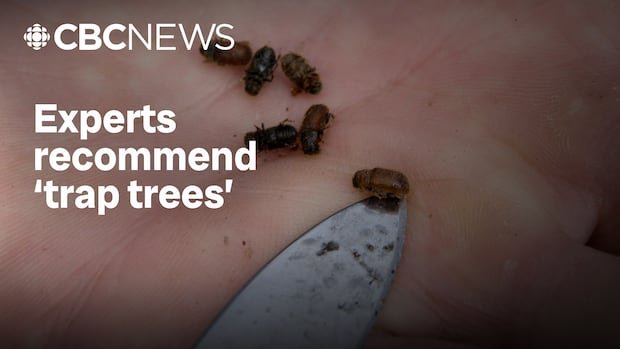
The spread of Dutch elm disease is primarily driven by bark beetles that infest elms, leading to the blockage of their water-conducting tissues. To combat DED, infected elms must be promptly removed, a strategy previously involving the removal of nearby healthy elms, inadvertently impacting the genetic diversity and disease tolerance of the elm population.


More like thisRelated
“Verdict: ‘Keffe D’ Found Guilty in Tupac Murder Case”

“Trade Conflict Spurs Price Hikes in Electronics”
“Explosive Drone Found at Leipzig Airport; Lavrov Warns of Escalation”
“Canadian Delegation Emphasizes US Relations at Iowa State Fair”

