Italy’s culture minister announced on Sunday that four pieces by the 15th-century artist Antonello da Messina were stolen from the Museo Regionale di Messina overnight.
Alessandro Giuli expressed shock and sadness upon learning about the theft in a statement.
The stolen artworks include portions of the only remaining work by the Renaissance painter in his hometown, as well as a small painting acquired by the Sicilian Region twenty years ago.
The theft occurred on Saturday night during a national holiday in Italy, as reported by the media.
Museum director Marisa Mercurio described the incident, which took place just before 10 p.m., as devastating.
She emphasized that the stolen pieces were among Antonello da Messina’s most significant and well-known works, resulting in a substantial loss for the museum, city, community, and art world.
Enzo Caruso, a local councillor overseeing culture, likened the event to a scene from a movie, suggesting that the recent acquisition of a Messina artwork by the Italian state for $15 million earlier this year might have attracted the attention of the thieves.
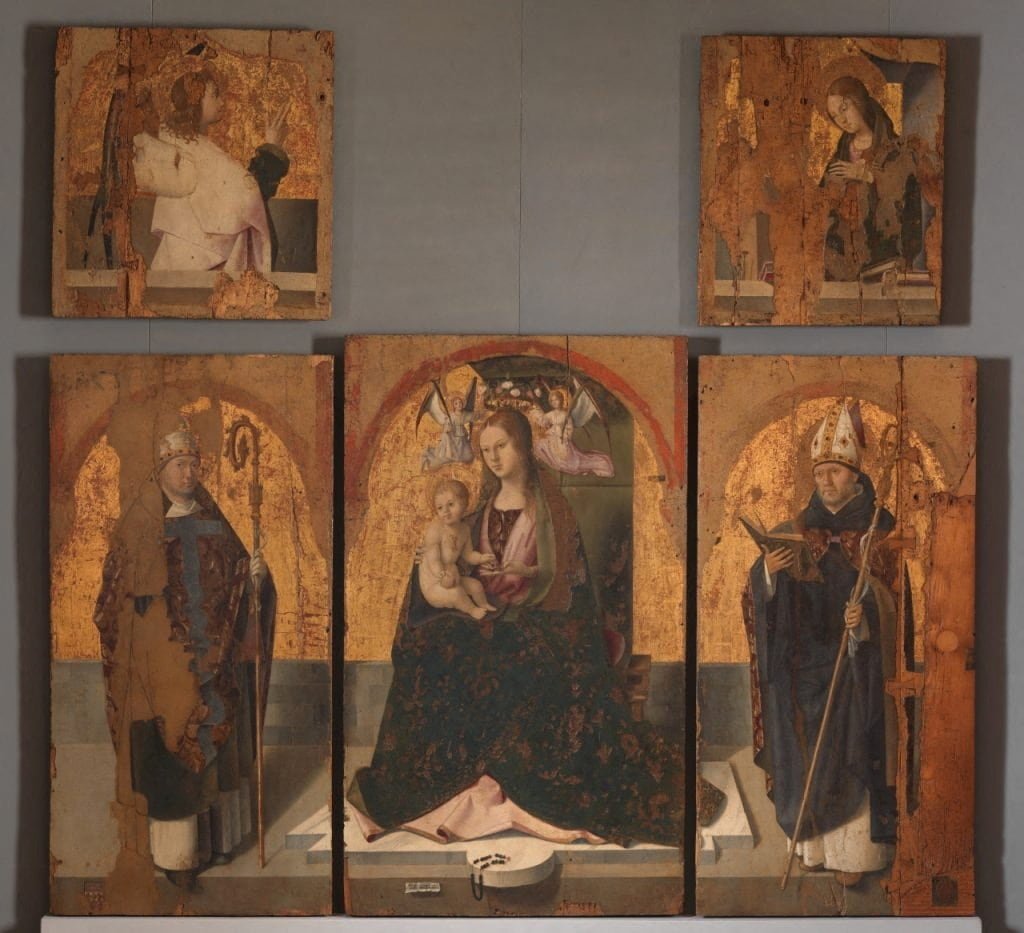
Three out of five remaining panels from an altarpiece known as Polittico di San Gregorio were among the stolen items.
The altarpiece, originally consisting of six panels and intended for a local monastery destroyed in Messina’s 1908 earthquake, was the only piece by the Sicilian painter that had never left his birthplace.
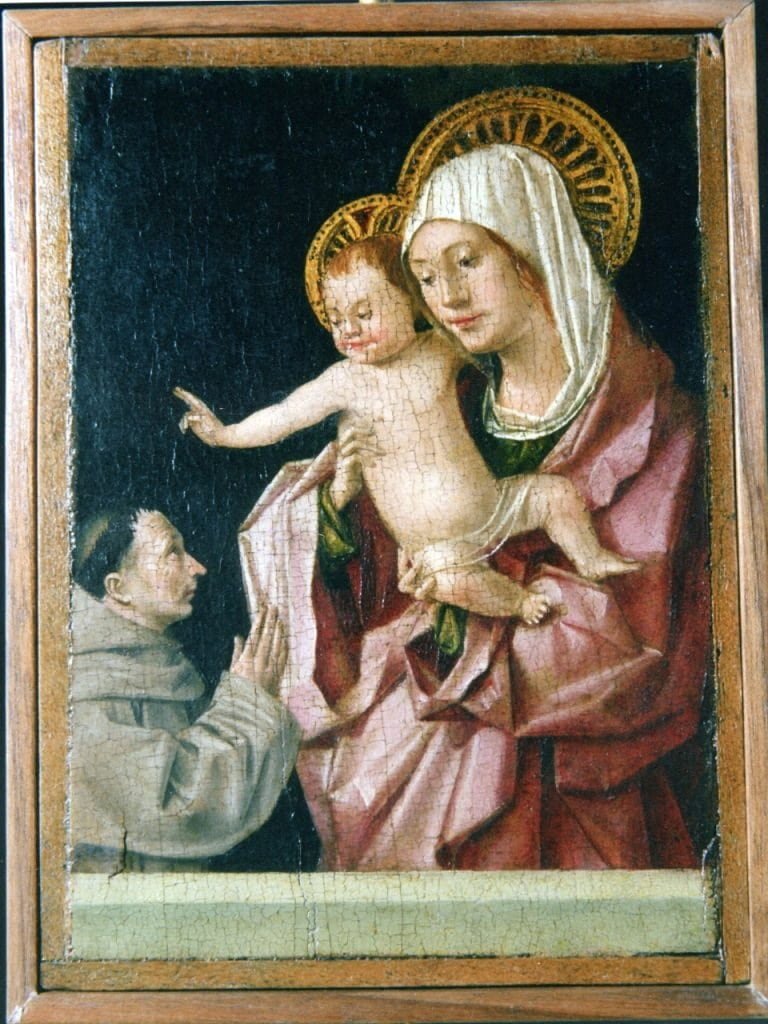
Additionally, a fourth artwork, a small double-sided painting portraying the Virgin with Child and a Franciscan monk on one side and Christ on the other, was taken from a secure display case.
Theft Incident Follows Recovery of Other Artworks
The artwork was part of the Wilhelm Soldan collection and was sold to the Sicilian Region by Christie’s in 2003 after being attributed to the artist that year.
In February, Italy’s Culture Ministry purchased another double-sided painting, known as Ecce Homo, from Sotheby’s just before it was scheduled for auction.
Art-crime analyst Lynda Albertson pointed out that the stolen works are easily recognizable, making it challenging to sell them through legitimate channels.
Albertson, the CEO of the ARCA art crimes research association, warned that although stealing an Antonello da Messina might be simple, selling it could prove difficult and costly for the perpetrators.
She further explained that renowned artworks like these often circulate among criminals, serving as collateral for illicit activities.
Born around 1430, Messina received training in Naples, where he studied the works of Provençal and Flemish artists, reflecting their influences in his own creations.
He later returned to Messina in 1457 and continued working there until 1474.
The theft occurred shortly after Italian authorities recovered three paintings by French masters Paul Cézanne, Pierre-Auguste Renoir, and Henri Matisse that had been